
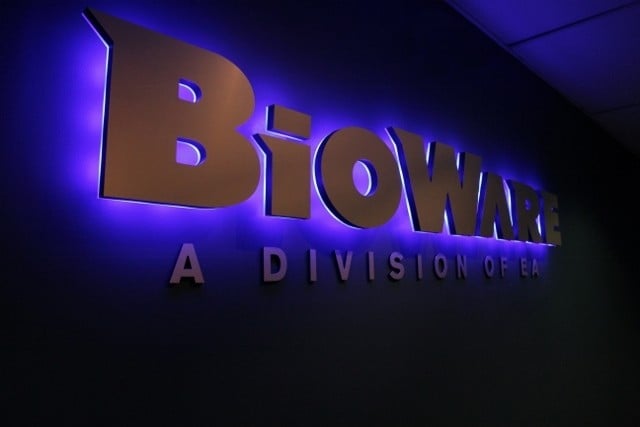
There are some developers whose names become almost as important as the games they create. For RPG fans, BioWare was one of those names.
For more than three decades, the Canadian studio created worlds players could become invested in, characters they could grow attached to, and stories shaped by the decisions they made along the way. From Baldur’s Gate and Star Wars: Knights of the Old Republic to Mass Effect and Dragon Age, BioWare helped establish expectations for what a modern role-playing game could accomplish.
On October 21, 2026, Electronic Arts announced that BioWare would close, bringing an end to development of the next Mass Effect game and more than 30 years of work under the studio’s name.
It was sad news, although I can’t say it came as a complete surprise.
Dragon Age: Origins remains one of my favorite games of all time, and BioWare’s earlier work represents some of the things I value most about RPGs. But the studio had been facing difficulties for years, and the wider gaming industry has been wrestling with problems that go far beyond any one developer.
What’s particularly frustrating is that I don’t believe BioWare had completely lost the ability to make compelling games. Even some of its most troubled releases had good ideas, enjoyable mechanics, and considerable potential.
Unfortunately, potential alone isn’t enough.
BioWare’s story isn’t simply one of great games followed by bad ones. It’s a much more complicated history of successes, experiments, changing expectations, difficult development cycles, and decisions made both within the studio and by its publisher.
And while there is plenty of reason to celebrate what BioWare accomplished, I think there’s also value in asking what went wrong.
The Decision That Ended BioWare
In its October 21 announcement, Electronic Arts outlined a restructuring intended to concentrate investment around fewer projects and what it considered its strongest business opportunities.
Among those changes was the cancellation of the next Mass Effect game, which had been in early development at BioWare. EA also confirmed that it would close the studio and its Edmonton workspace.
The changes extended beyond BioWare. EA announced adjustments across several businesses, including a smaller team supporting skate., while confirming continued development of projects such as Marvel’s Iron Man and the next Star Wars Jedi game.
According to Bloomberg reporting carried by Reuters and Game Informer, approximately 400 positions were being eliminated across EA, including roughly 50 at BioWare. Those figures were reported estimates rather than totals provided in EA’s public announcement.
A subsequent Bloomberg report, published October 30 and summarized by Game Informer, offered additional context. According to that reporting, EA chose to prioritize a potential Star Wars Battlefront III project over continued investment in the next Mass Effect.
EA has not publicly confirmed that specific explanation, and the reporting identified other contributing factors. Nevertheless, it raises an interesting question about how publishers determine which projects are worth funding.
A new Mass Effect would have carried a recognizable name and an established audience. But it also would have required considerable further development from a studio whose recent history had been difficult.
From a business standpoint, I can understand why a publisher would evaluate those risks. Understanding the decision, however, isn’t the same as agreeing with it.
Whatever the reasoning, the consequences extend beyond the cancellation of one game. Developers lost their jobs, years of creative work were left unfinished, and one of gaming’s most recognizable RPG studios ceased to exist.
Looking Back: The Games That Made BioWare
To understand why this closure matters, it’s worth revisiting the studio’s history. BioWare didn’t become one of the industry’s best-known RPG developers because of a single successful franchise. Its reputation was built across several generations of games, with different worlds, combat systems, and approaches to storytelling.
Building a Reputation: Baldur’s Gate and Neverwinter Nights
BioWare was founded in 1995, and its breakthrough arrived with Baldur’s Gate in 1998. Working within the Dungeons & Dragons setting, the game helped bring traditional computer role-playing experiences to a broader audience. Its party-based combat, character customization, exploration, and narrative choices established many qualities that players would later associate with the studio.
Baldur’s Gate II: Shadows of Amn followed in 2000, further strengthening BioWare’s reputation for large, complex RPG adventures. Then came Neverwinter Nights in 2002. Alongside its campaign, the game provided tools for players to create adventures and run tabletop-inspired multiplayer sessions.
That willingness to give players ways to create and shape experiences was an important part of BioWare’s early identity. The studio wasn’t just telling players a story; it was increasingly interested in giving them a meaningful role within it.
The Original Xbox Years: Knights of the Old Republic and Jade Empire
For Xbox players, BioWare’s legacy became particularly important with the release of Star Wars: Knights of the Old Republic in 2003. KOTOR combined the recognizable Star Wars universe with extensive dialogue, companions, character progression, and choices that could dramatically affect the player’s journey.
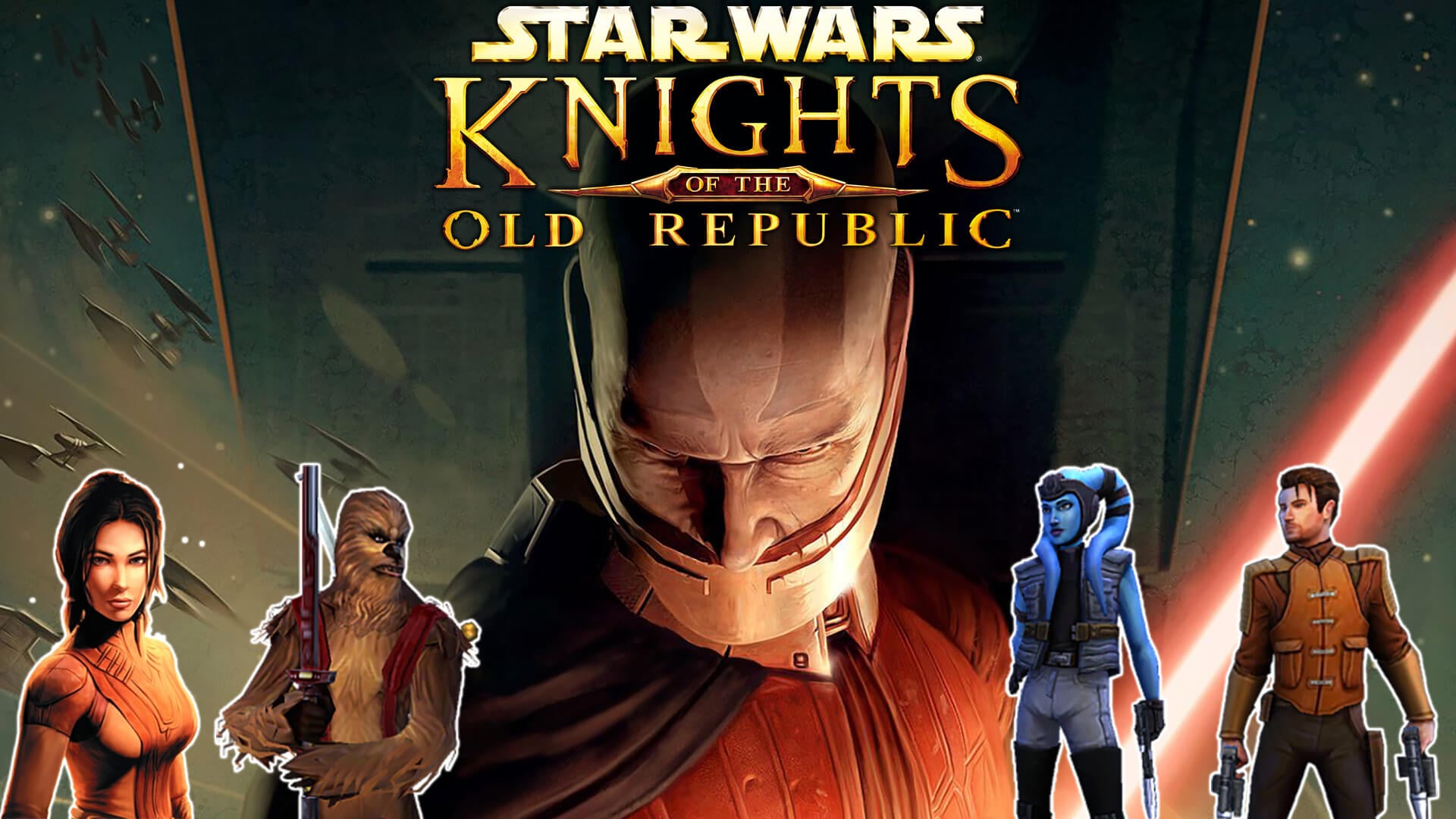
It demonstrated how a substantial, traditionally PC-oriented RPG experience could work on a home console without losing the elements that made it compelling.
BioWare followed it with Jade Empire in 2005, another original Xbox release that exchanged science fiction for a fantasy world inspired by Chinese mythology and martial arts. Although Jade Empire never became a long-running franchise on the scale of Mass Effect or Dragon Age, it remains an important part of BioWare’s history. It showed that the studio was capable of creating original worlds beyond its established licensed properties.
Both games contributed to a period when Xbox was becoming an increasingly important home for Western RPGs.
Mass Effect and Dragon Age: BioWare at Its Height
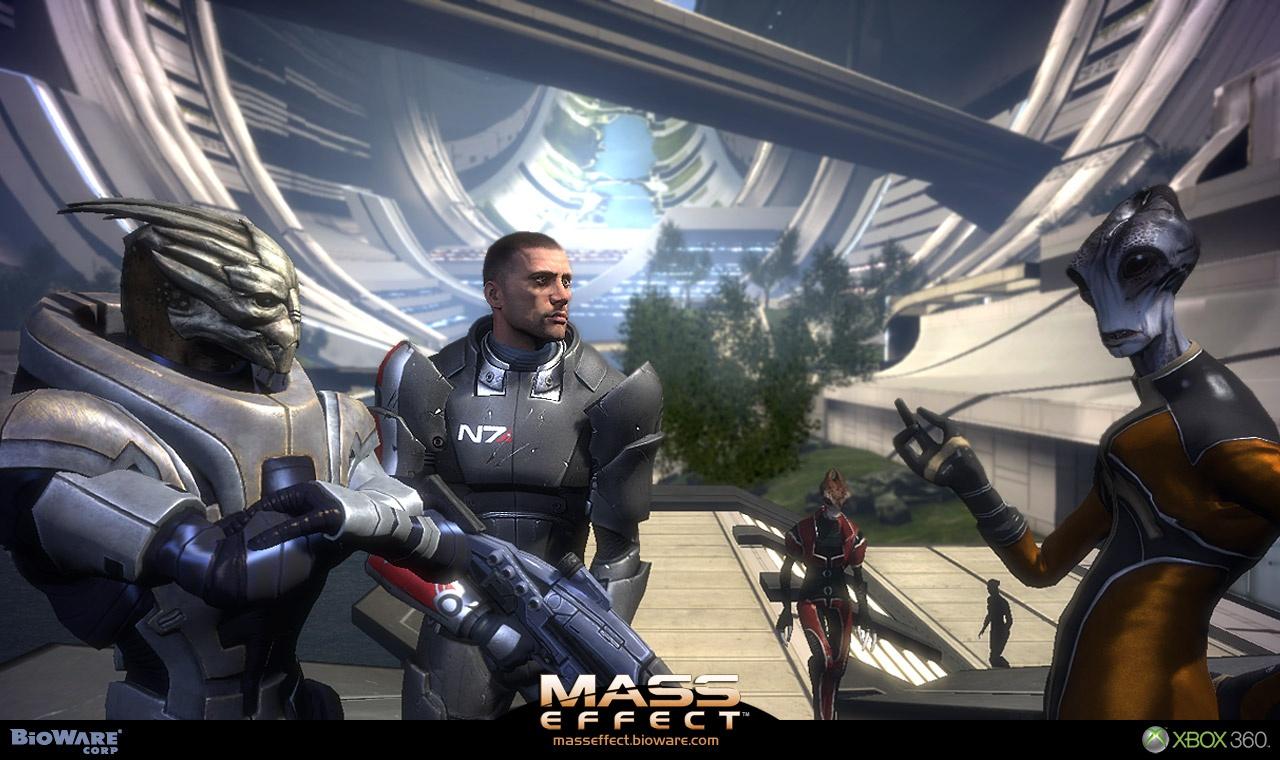
The original Mass Effect arrived on Xbox 360 in 2007 and introduced what would become one of BioWare’s defining franchises. Its combination of science-fiction worldbuilding, cinematic presentation, memorable companions, and player-driven decisions helped establish a distinctive identity. The following two games refined the formula, with Mass Effect 2 in particular becoming one of the studio’s most critically celebrated releases.
The trilogy was not without controversy. The ending of Mass Effect 3 prompted substantial criticism in 2012, eventually leading BioWare to release an extended version providing additional context. But disagreement over an ending shouldn’t overshadow the achievement of building a science-fiction trilogy that so many players became deeply invested in.
Meanwhile, Dragon Age: Origins arrived in 2009, bringing BioWare back toward its traditional fantasy RPG roots. For me, this remains the studio’s greatest achievement.
What makes Origins special isn’t necessarily that it does any one thing better than every other RPG. It’s how much it brings together, and how well those different elements support one another.
The tactical combat gives you meaningful decisions to make. Character creation and development provide considerable depth. Your companions matter, not just as characters in the story, but as members of the party you build and take into battle.
The quests, worldbuilding, dialogue, and narrative choices give those systems context. You’re not just building characters to overcome combat encounters, and you’re not simply watching a story unfold. You’re participating in an adventure where each part strengthens the others.
Few games have offered that same breadth of experience while giving so many of their individual systems room to matter. That’s why Origins remains one of my favorites, and why I still think it represents something special in RPG design.
Dragon Age Continues: Different Approaches, Different Results
Of course, BioWare didn’t stop experimenting. Dragon Age II arrived in 2011 with a more focused setting and a different approach to combat and narrative structure. It received respectable critical reviews, but its smaller scope and repeated environments drew criticism, particularly when compared with Origins.
Then, in 2014, Dragon Age: Inquisition expanded the scale considerably. With large environments, a broader political conflict, and an extensive cast of characters, it became another major critical success for BioWare. Inquisition won Game of the Year at The Game Awards in 2014, demonstrating that the studio was still capable of producing celebrated RPGs well after its early successes.
Looking at these three Dragon Age games together is revealing. Each offered a different interpretation of the franchise, and each was received differently. There’s nothing inherently wrong with experimentation or changing direction. A sequel doesn’t have to reproduce its predecessor. But changing a successful formula also means understanding which elements made that formula work in the first place.
For me, Origins remains the strongest example of BioWare bringing its various strengths together into one cohesive experience.
When the Results Became Less Consistent
By the second half of the 2010s, BioWare was entering a more difficult period. Three games in particular illustrate some of the problems the studio faced: Mass Effect: Andromeda, Anthem, and Dragon Age: The Veilguard.
I’ve played all three, and my feelings toward them are more complicated than simply calling them bad games. Each had something I wanted to enjoy. Each also left me disappointed in a different way.
Mass Effect: Andromeda — A Game That Needed More Time
Mass Effect: Andromeda released in 2017, attempting to establish a new chapter for the franchise with a different cast and setting. I played it at launch, but the game was so broken that I eventually put it down. My intention was to return once BioWare had released enough updates to address the technical problems.
Those updates did come. BioWare improved animations, fixed numerous bugs, and addressed some of the most visible issues players had encountered. But in August 2017, the studio announced that update 1.10 would be the game’s final single-player patch. There would be no further single-player updates or in-game story content.
That was disappointing. I think Andromeda had room to become a much better game. BioWare had addressed many of its worst technical issues, but additional improvements and story expansions could have done a great deal to strengthen the experience.
New content might also have given the unfamiliar setting and characters more opportunities to develop an audience of their own. Of course, there’s no guarantee that additional support would have transformed Andromeda into another critically celebrated Mass Effect. But ending development meant those opportunities would never be explored.
Andromeda’s situation highlights one of the problems with launching a game before it’s ready: even when the developers make significant improvements, the damage done to its reputation can be difficult to overcome.
Anthem — A Great Beginning Without a Future
Anthem, released in 2019, was an even more ambitious departure from BioWare’s established style. Built around cooperative action, a shared online world, and continuing content updates, it was designed to become an ongoing experience rather than a traditional standalone RPG.
And here’s where my experience differs from some of the broader criticism surrounding the game: I actually loved playing through Anthem’s base campaign.
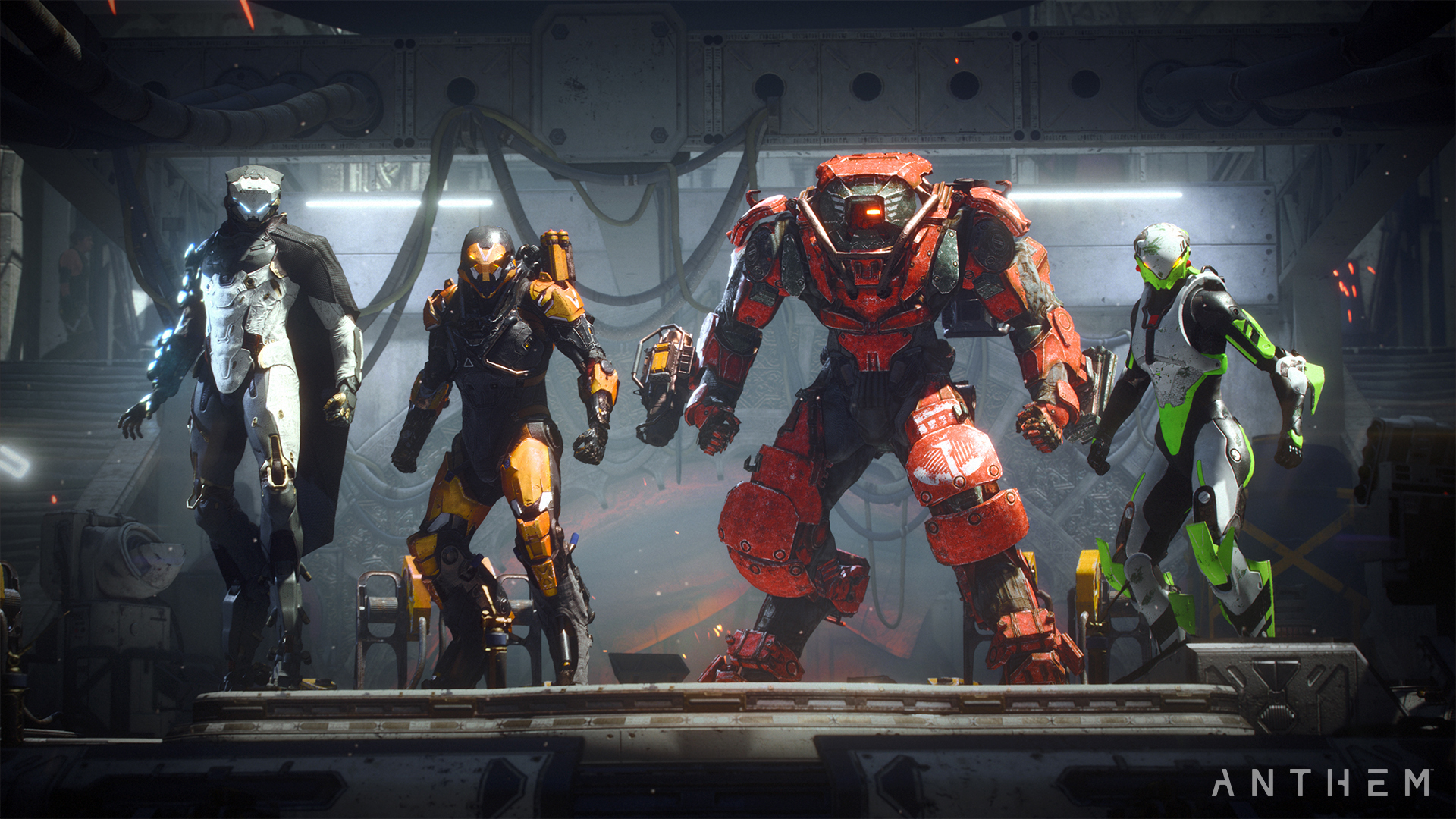
The combat was enjoyable, the flying mechanics were excellent, and the Javelin suits made moving through the world feel exciting. There was something genuinely compelling about the foundation BioWare had created. But then I finished the main game, and it felt like the experience simply stopped.
For a live-service game, a satisfying endgame is essential. Players need meaningful progression, challenges, rewards, and reasons to keep returning. Anthem didn’t have enough of that at launch.
BioWare began making improvements and releasing additional content, but the process was too slow, and what arrived wasn’t enough to address the underlying issues. Eventually, the studio announced a substantial overhaul, commonly known as Anthem NEXT. The proposed changes focused on progression, rewards, and the fundamental gameplay loop.
To me, that sounded like exactly the kind of work Anthem needed. The problem was when it arrived in the game’s development history.
I believe those changes should have become the immediate priority following launch. Waiting so long to commit to a fundamental overhaul meant the game continued losing momentum while its developers worked toward a solution that players had no guarantee of ever receiving.
In February 2021, BioWare cancelled Anthem NEXT. The game’s servers eventually shut down in January 2026, leaving the online-only game no longer playable.
That final outcome is particularly disappointing because I enjoyed so much of what Anthem initially offered. It wasn’t a game without potential. It was a game with an enjoyable foundation that never received the complete, sustainable experience it needed.
And it raises an important question about live-service development: if you’re going to sell a game with the promise of an evolving experience, how much of that experience needs to be ready when players first arrive? I think Anthem demonstrated the danger of relying too heavily on the idea that you can finish building the experience after launch.
Dragon Age: The Veilguard — An Unsatisfying Conclusion
The final major BioWare release was Dragon Age: The Veilguard in October 2024. I went into it wanting to see where the story would go. Dragon Age is one of my favorite RPG franchises, and after so many years of following its world and characters, I wanted to experience the continuation and resolution of its long-running narrative threads.
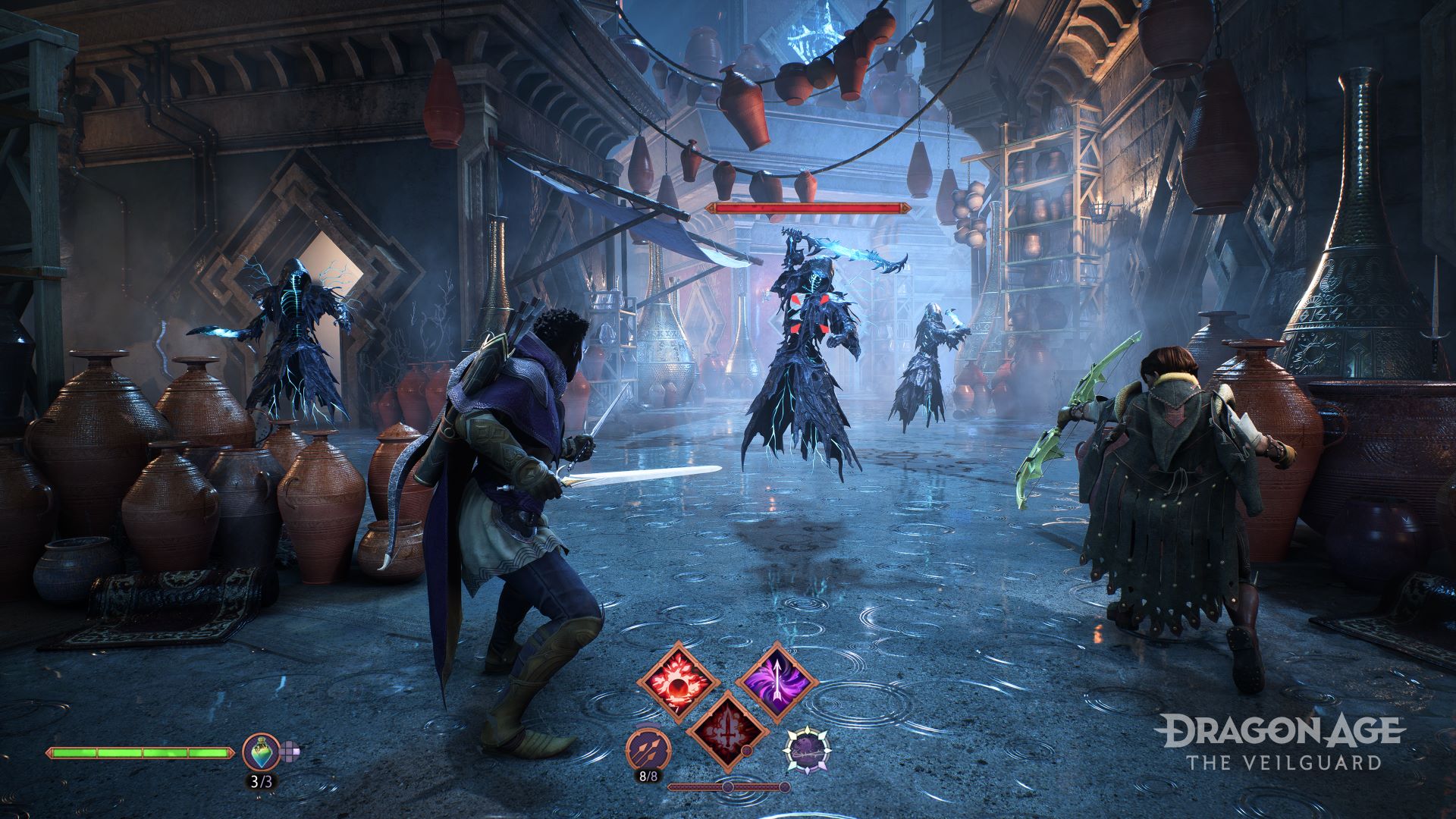
I knew the gameplay would be different. Every Dragon Age game has moved progressively further toward action-oriented combat, so while The Veilguard leaned more heavily in that direction than I would have preferred, I was willing to accept it. A franchise can evolve, and not every sequel needs to play like the original.
My larger disappointment was with the story and writing. Compared with previous installments, I found the writing noticeably weaker. The characters and narrative didn’t consistently achieve the same depth that had made BioWare’s earlier RPGs so memorable.
More importantly, the handling of the overarching story felt rushed to me. After everything established in Origins and developed across the subsequent games, I had expected something more substantial from the way The Veilguard brought those long-running threads together.
Instead, it often felt as though the game was eager to bring the story to a conclusion without fully exploring all the possibilities that had been built up over the years.
I understand that other players enjoyed the direction BioWare chose, and The Veilguard received generally positive critical reviews. My disappointment is a personal assessment of the game and the expectations established by its predecessors.
But when I look back at the world introduced in Dragon Age: Origins, the political conflicts, the history, the mysteries, and the storytelling possibilities, I find it difficult to reconcile all that potential with the conclusion we ultimately received. It could have been so much more.
Commercially, The Veilguard also struggled to meet its publisher’s expectations. In January 2025, EA reported that the game had engaged approximately 1.5 million players during its launch quarter, nearly 50 percent below expectations. That was a measure of player engagement during the quarter, not a confirmed lifetime sales total. Nevertheless, it demonstrated that the game had not achieved the audience EA had anticipated.
For a studio already facing an uncertain future, that was another significant setback.
Who Was Responsible? EA, BioWare, or Both?
When a beloved studio closes, there is a natural tendency to look for someone to blame. In BioWare’s case, much of that attention falls on Electronic Arts. And there are legitimate reasons to examine EA’s role.
Over the years, reports have described pressure across the publisher to pursue online services, recurring engagement, and different business models. BioWare’s projects were not immune to those industry trends.
For example, Bloomberg reported in 2021 that the next Dragon Age had previously been designed with a significant multiplayer component before EA allowed the developers to return to a single-player-focused project. The shift was later acknowledged by BioWare itself, which described having explored different concepts, including multiplayer, during development.
These changes matter because they potentially consume years of work, interrupt creative direction, and complicate an already demanding development process. But I don’t believe responsibility falls entirely on EA.
Studio leadership has responsibilities too. A publisher can impose priorities, approve funding, or demand changes, but the leadership within a development studio is responsible for organizing its teams, establishing a clear creative direction, and demonstrating that the project being developed is viable.
That includes knowing when to push back against decisions coming from above. And I think the ability to push back is closely connected to what a studio can actually demonstrate.
If a team spends years in pre-production, repeatedly changes direction, and has little in the way of a convincing, playable product to show for that time, it becomes much harder for its leadership to argue against a publisher’s demands.
On the other hand, if a studio can demonstrate a compelling single-player game, with a strong prototype, a clear vision, and a realistic development plan, that gives its leaders something substantial to defend. It doesn’t guarantee the publisher will listen. But it gives the argument greater weight.
The reporting surrounding Anthem provides a particularly troubling example. In a 2019 investigation, Kotaku’s Jason Schreier interviewed developers who described years of uncertainty, major changes in direction, and problems establishing a consistent vision. Although the project had been in development for years, much of the finished experience reportedly came together during its final stages.
That isn’t simply a story about a publisher demanding a particular kind of game. It also raises serious questions about development management, communication, and the decisions being made within the studio. EA’s business priorities and BioWare’s internal leadership problems could both contribute to the same troubled outcome.
In my view, that’s exactly what makes the situation so frustrating. I don’t believe we can simply blame EA for everything while treating BioWare’s leadership as though it had no responsibility. Nor can we ignore the pressure publishers place on development teams and pretend the studio operated independently of those decisions.
Both sides had responsibilities, and I believe both ultimately failed the studio, its developers, its fans, and the games themselves.
That doesn’t mean every individual leader was equally responsible, or that the developers building the games deserve blame for decisions beyond their control. It means the problems were larger than any single release or individual. And unfortunately, the people who ultimately lose their jobs are not necessarily those who had the greatest influence over the decisions that led to that outcome.
The Problem With Games That Keep Getting Bigger
BioWare’s story also connects to a wider concern I’ve had about the gaming industry over the past several years. Game development has become extraordinarily expensive, particularly at the largest studios.
Projects can take five, six, or more years to complete. Teams grow, technology becomes more demanding, and expectations continue to rise. There’s nothing inherently wrong with ambitious games. Some of the industry’s greatest achievements exist because developers were willing to attempt things that once seemed impossible. But ambition needs direction.
Adding developers doesn’t automatically make a troubled project better. Extending development doesn’t necessarily solve problems with its design. And increasing a game’s budget doesn’t guarantee that players will find the finished experience more enjoyable.
When a project lacks a clear vision, those additional resources can sometimes make its problems more difficult to manage. I think we’re seeing the consequences of that across parts of the industry.
Large budgets create large expectations, and when a game doesn’t meet them, the consequences can extend far beyond the individual project. Studios are restructured, employees are laid off, and entire franchises can be placed on hold or cancelled.
BioWare’s closure is an especially painful example because of the extraordinary history behind the studio. But I don’t think it’s an isolated warning.
The industry needs to find more sustainable ways to develop ambitious games without every major release becoming an enormous financial gamble. Perhaps that means smaller teams, more clearly defined projects, better management, or simply accepting that not every game needs to be bigger than the one that came before it. Whatever the solution, the current approach clearly isn’t working for everyone.
Who Will Make the Next Mass Effect or Dragon Age?
Despite BioWare’s closure, I don’t think the kind of games it created are disappearing. Deep, story-driven RPGs with companions, meaningful choices, character progression, and substantial worldbuilding still exist. They’re difficult games to make, and I suspect we’ll continue seeing fewer of them than genres with simpler development requirements or more predictable production cycles.
But the audience hasn’t disappeared. Players still want those experiences. They want the sense of adventure that comes from exploring a new world, meeting memorable companions, and making decisions that affect the journey. They want the next Mass Effect. They want the next Dragon Age.
And with BioWare gone, there’s now a considerable opportunity for another developer to step into that space. I wouldn’t be surprised if the studio that eventually fills that gap turns out to be smaller and more independent than people expect.
Rather than a massive AAA publisher committing hundreds of millions of dollars to a new franchise, perhaps it will be a more focused team with a strong creative vision and a willingness to build something ambitious within a manageable scope.
That doesn’t necessarily mean a small studio can easily reproduce the scale of Mass Effect or Dragon Age. Games like those require considerable talent, coordination, and resources. But a smaller developer doesn’t have to recreate every part of those experiences to capture what made them special.
Strong writing, memorable companions, meaningful choices, and deep RPG systems can be more important than enormous environments or the latest graphical technology. And who knows? Perhaps some of the developers now looking for work following BioWare’s closure will be among those who create the next great RPG.
We’ve seen talented developers leave established studios and go on to build new teams before. There’s no guarantee that something like that will happen here, but I think the possibility is worth being excited about. The demand is there. The opportunity is there. Someone will eventually try to fill that void, and I’ll be interested to see who steps forward.
Remembering the People Behind the Games
One final thing shouldn’t be lost amid the discussion of financial performance, project management, and what might have gone wrong. BioWare was a studio made up of people.
Its games were created by writers, artists, programmers, designers, animators, composers, producers, and many others whose contributions made those worlds possible. Some worked there for decades. Others arrived more recently and were helping develop what they hoped would become the next chapter of Mass Effect.
Following the closure, developers shared accounts of their experiences at the studio and the work they had been doing on its cancelled project. For them, this isn’t simply a matter of a favorite franchise being cancelled. It’s the loss of a workplace, colleagues, and the opportunity to finish something they had invested years of their careers into creating.
Those are the people I hope the industry doesn’t forget. The closure of BioWare doesn’t erase their skills, their experience, or their ability to create something worthwhile. And while I have plenty of criticisms of how the studio and its projects were managed, those criticisms don’t diminish the accomplishments of the teams that built its games.
I hope the affected developers find new opportunities, whether at established studios or through projects of their own. And I hope some of them get another chance to create the kind of ambitious, memorable RPGs that made BioWare such an important part of gaming history.
Because even with all its difficulties, BioWare gave us some extraordinary adventures.
I can still return to Dragon Age: Origins and find the same combination of storytelling, character building, tactical combat, and exploration that made it one of my favorite games in the first place. That doesn’t change because the studio is gone.
BioWare’s history includes remarkable successes, disappointing releases, unfinished opportunities, and some difficult lessons about how games are developed and managed. We should be willing to acknowledge all of it.
And while the studio’s story has come to an end, I don’t believe the kind of games it helped define are finished. There’s still plenty of room for another great adventure. I hope the people who made BioWare special get the opportunity to help create it.
This editorial expands upon “BioWare: The Studio and Its Legacy,” the cover feature in the November 2026 issue of SavePoint Codex Magazine. The magazine article focuses primarily on the confirmed news surrounding the closure, while this website editorial explores the studio’s history, development difficulties, and my personal perspective on its legacy.
Sources and Further Reading
- BioWare — Official Closure Statement (October 21, 2026)
- Electronic Arts — Building EA’s Next Chapter (October 21, 2026)
- Game Informer — Reported EA Layoffs
- Game Informer — Bloomberg’s Battlefront III Reporting
- BioWare — Mass Effect: Andromeda Update (August 2017)
- BioWare — Anthem NEXT Cancellation (February 2021)
- Kotaku — How BioWare’s Anthem Went Wrong (April 2019)
- Bloomberg — EA Removes Multiplayer From Dragon Age (February 2021)
- BioWare — The Next Dragon Age Has a New Title (June 2024)
- Electronic Arts — Preliminary Q3 FY25 Results (January 2025)
- BioWare — Historical Games Catalog


Leave a Reply